Grid monitoring
where it’s most needed

We partner with government agencies, funders, power providers, and researchers to provide accurate, timely data about energy systems. Our custom sensors, analytics, and expertise help customers better focus their investments into grid infrastructure.

Our process

What does working with us look like?

We work with partners on incremental projects, or large-scale deployments. Projects usually follow four steps.

We build local teams to deploy our custom sensors in residents’ homes, and in key locations for accurate data collection.
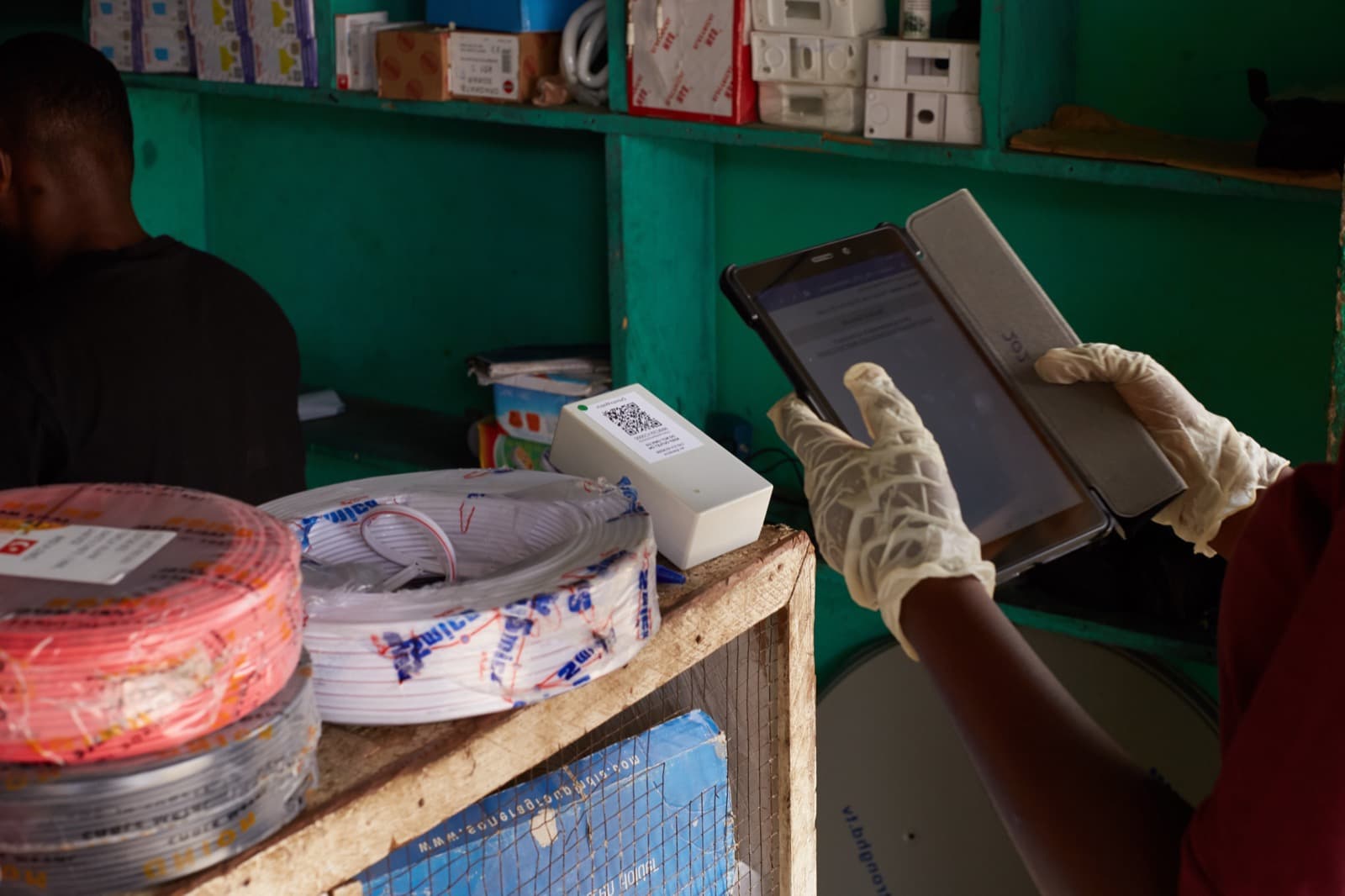

A sensor being installed in a home.Team members preparing for a deployment.

Why it matters

Better data means better outcomes for everyone

Clearer operational visibility

With our sensors deployed, utility providers can better understand where the grid is weakest and respond accordingly.

Improved long-term planning

Government agencies, funders, power providers, and researchers can use our data to better prioritize investments and evaluate real program outcomes.

Better service for citizens

At the end of the day, people get better service when the infrastructure they rely on is monitored.
More about our projects

We regularly publish behind-the-scenes details of our work on our blog.

Read our blog
Avatar for Olufolahan OsunmuyiwaAvatar for Noah Klugman
Olufolahan Osunmuyiwa and Noah Klugman

Could improving power quality boost economic growth in Sierra Leone?

In this post, we present findings from a nine-month study in Freetown, Sierra Leone, using GridWatch sensors deployed in 48 businesses across 12 transformers. The study reveals that MSMEs in eastern Freetown experienced nearly seven times more outage hours than those in western Freetown, with businesses experiencing an average of 300 hours of outages per month. The post highlights how improving power quality and reliability could raise utility revenues, support capacity planning, and unlock investment for economic growth.
Avatar for Margaret Odero
Margaret Odero

Re-examining Healthcare Electrification Metrics: The Case for Disaggregated Metrics in Critical Care

In this post, we describe findings from measuring both hospital- and room-level KPIs, uncovering that different rooms or departments within healthcare facilities experience varying PQR outcomes. In doing so, we highlight the importance of considering room-level KPIs, especially in critical rooms, alongside hospital-level metrics to more accurately measure healthcare electrification outcomes.
Avatar for Alexandra Wall
Alexandra Wall

Lessons for the Design of Future MCC Power Infrastructure Programs

In 2022, the five-year, $316 million Ghana Power Compact came to a close. nLine sensor data supported the evaluation of a line bifurcation project under the Compact. This blog is adapted from Millennium Challenge Corporation’s (MCC) final learnings from this impact evaluation and highlights lessons for the design of future power infrastructure programs.

Get in touch

We’re open to new partnerships, or sharing more with people interested in our work.